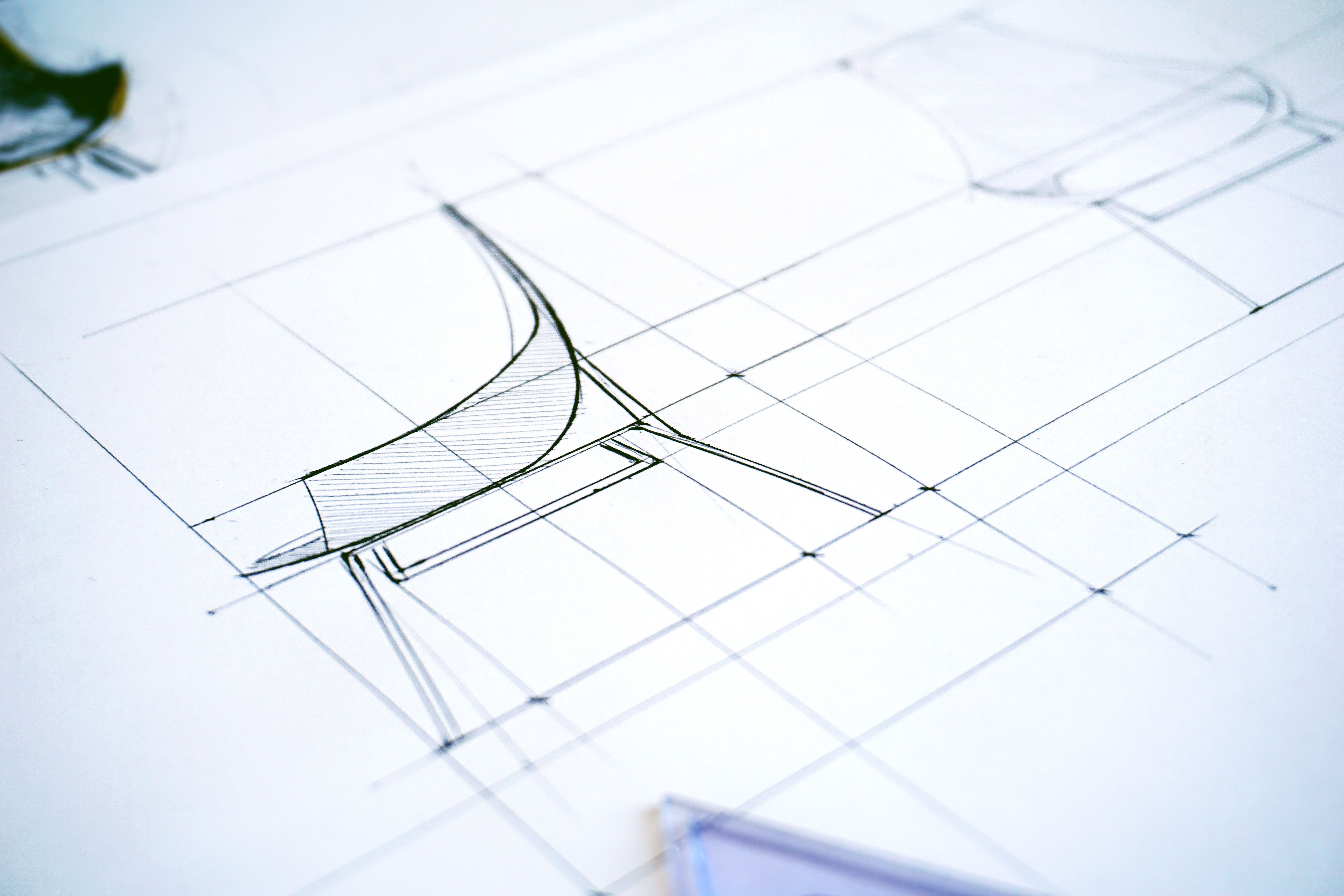
Understand how broken lines are used in design patent drawings to show unclaimed features, environment, and boundaries in USPTO filings.
What broken lines communicate
Broken lines in design patent drawings commonly identify subject matter that is shown for context but does not form part of the claimed design. For example, an applicant may claim the ornamental shape of a handle while showing the rest of the product in broken lines. The surrounding product helps the reader understand where the claimed feature is located without necessarily bringing that surrounding structure into the claim.
Broken lines can also have other recognized uses, including showing environmental structure or certain boundaries. The meaning should be made clear by the figures and the written description. Because the drawings define the visual disclosure, the line convention must be applied consistently.
Solid lines and broken lines should follow the claim strategy
Solid lines generally identify the portions presented as part of the claimed design, while broken lines often identify portions that are not claimed. That distinction makes line selection one of the most important instructions a patent illustrator receives.
An illustrator should not decide which features the client wants to protect. The applicant and patent attorney should establish the scope, then communicate it through annotated references or clear written directions. The illustrator's role is to execute that strategy accurately across every view.
Common broken-line problems
Problems arise when the same feature appears solid in one view and broken in another, when dash patterns change without reason, or when broken lines merge with claimed contours. Another frequent issue occurs when a line that should continue behind a claimed feature appears to terminate unexpectedly. These inconsistencies can make the figure set difficult to interpret.
Crowded products require extra care. User-interface elements, perforations, vents, seams, texture, and transparent areas may need different treatments. A clear hierarchy of solid lines, broken lines, and surface shading helps each figure remain readable.
How to mark source files for drafting
Before sending source files, create a simple color-coded reference. One color can identify claimed features, another can identify unclaimed features, and notes can explain any areas that should be omitted. Provide the same instruction for all supplied views, photographs, or CAD screenshots.
If the claim focuses on only part of a product, include at least one image that shows the complete article. Context helps the patent illustrator understand how components connect and reduces the risk of creating impossible geometry in hidden or partially visible areas.
Review every view before filing
A final review should compare corresponding features view by view. Confirm that claimed edges remain solid, unclaimed structure remains broken, and the transition points between the two are intentional. Check the perspective views last because they often reveal alignment or continuity problems that are less obvious in orthographic views.
Patent counsel should review the drawings and descriptions together. The figures, title, claim, and drawing description should communicate one consistent position about what is and is not claimed.
Request design patent drawing services
IP Illustration creates coordinated design patent figure sets with clear solid-line and broken-line treatment. Contact us with your marked references, desired views, and deadline for a tailored quote.
Sources and further reading
Written by Joy Allen for IP Illustration using “Leveraging the U.S. Design Patent System to Protect Innovative Product Designs” by Elizabeth D. Ferrill, Sanya Sukduang, and Mark D. Sweet, published by Finnegan, together with the official guidance listed below. This article is for general information and is not legal advice.
https://www.finnegan.com/en/insights/articles/leveraging-the-u-s-design-patent-system-to-protect-innovative.html
Official reference: USPTO MPEP Section 1503
https://www.uspto.gov/web/offices/pac/mpep/s1503.html